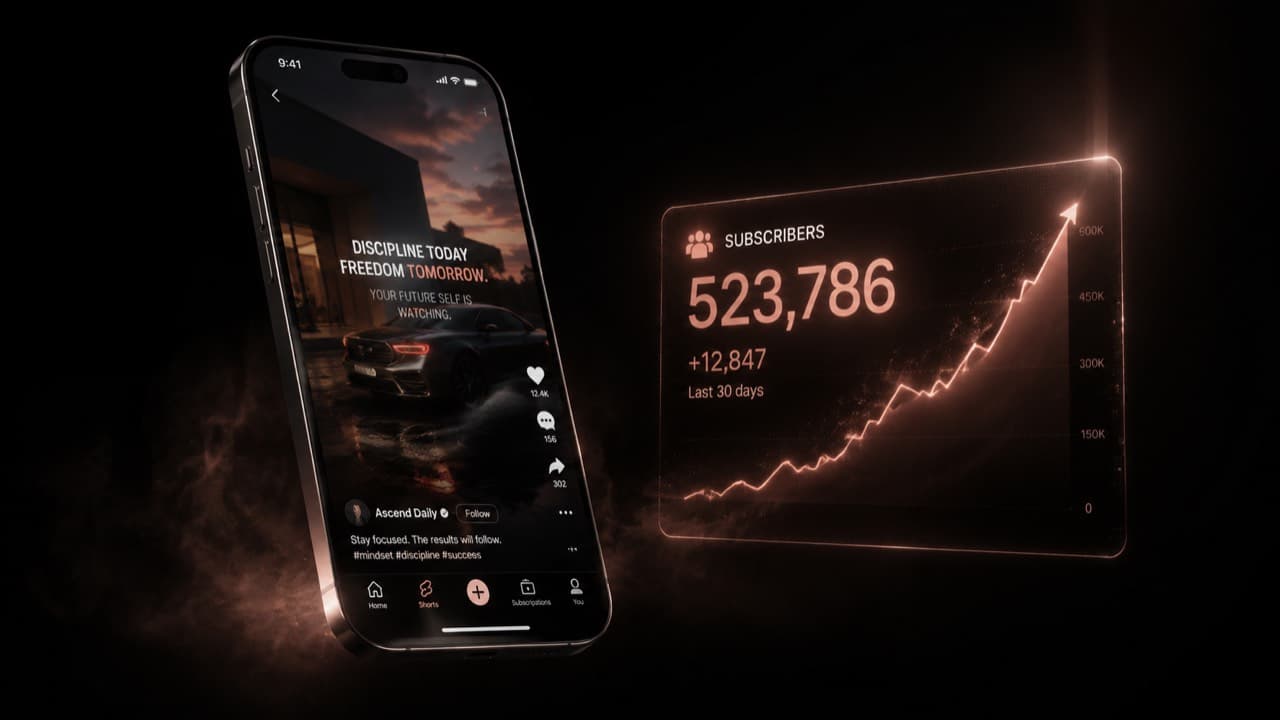
The argument against faceless YouTube used to be that it felt soulless — endless slideshows of stock photos with a robotic voiceover and no point of view. That argument is no longer correct in 2026. The combination of AI voice, AI video, and AI scripting has collapsed the production cost of a daily faceless channel to roughly two cups of coffee per video while making the output legitimately watchable. The question isn't whether to start a faceless channel anymore. It's how to start one that doesn't get strangled in the algorithm in week three.
This is the playbook we'd give a friend who wanted to ship 5 shorts and 1 long-form per day for 90 days. It assumes you have $30–$60 of monthly budget for tools, no production team, and a niche you're at least passingly interested in. Skip any section you've already nailed.

Step 1 — Pick a niche where the visuals can be cheap
Faceless niches are not all created equal. The good ones share three properties: the visual cost-per-second is low, the audience tolerates voiceover pacing, and the topic has enough surface area to ship 100 videos without repeating yourself. The bad ones don't.
Concretely, the niches that work best with current AI tooling are the ones where B-roll is the visual layer — productivity, finance basics, history explainers, science breakdowns, travel, gear reviews, study tips. The ones that struggle are niches where viewers expect a specific person on screen — fitness coaches, lifestyle vlogs, beauty tutorials, food creator culture. You can do those with an AI character, but you're playing on hard mode.
The fastest niche-validation test is to look at three existing successful channels in your prospective niche and ask whether you'd post the next 100 episodes if forced to. If yes, you have a niche. If you can't make it past 20, the audience signal isn't strong enough to carry you past the first wall.
Step 2 — Voice and script

On a faceless channel the voice is the personality. Get this wrong and the rest doesn't matter. The good news is that AI voice in 2026 (ElevenLabs, OpenAI TTS, Sesame, Cartesia) has moved past the uncanny-valley stage for English monologue delivery — you can produce something that 95% of viewers won't clock as AI on first listen. The bad news is that all of it sounds slightly the same.
Two practical moves. First: pick a voice and stick with it for 100 episodes. Voice consistency is your biggest channel-recognition asset; the audience needs one familiar narrator, not a different voice every week. Second: write your script for the voice, not for reading. AI voices have stronger inflection on declarative sentences than on subordinate clauses — so write short, declarative scripts with one idea per sentence. Almost all faceless channels under-edit the script and the audio drags.
On script generation: don't use ChatGPT raw. Use it as a research tool but write the actual script yourself, or at minimum heavily edit the AI draft. The reason is retention — AI-generated scripts have detectable rhythm patterns that audiences trained on AI content reject. Two passes of human editing fixes this entirely and takes 10 minutes per script.
Step 3 — Visual style and consistency
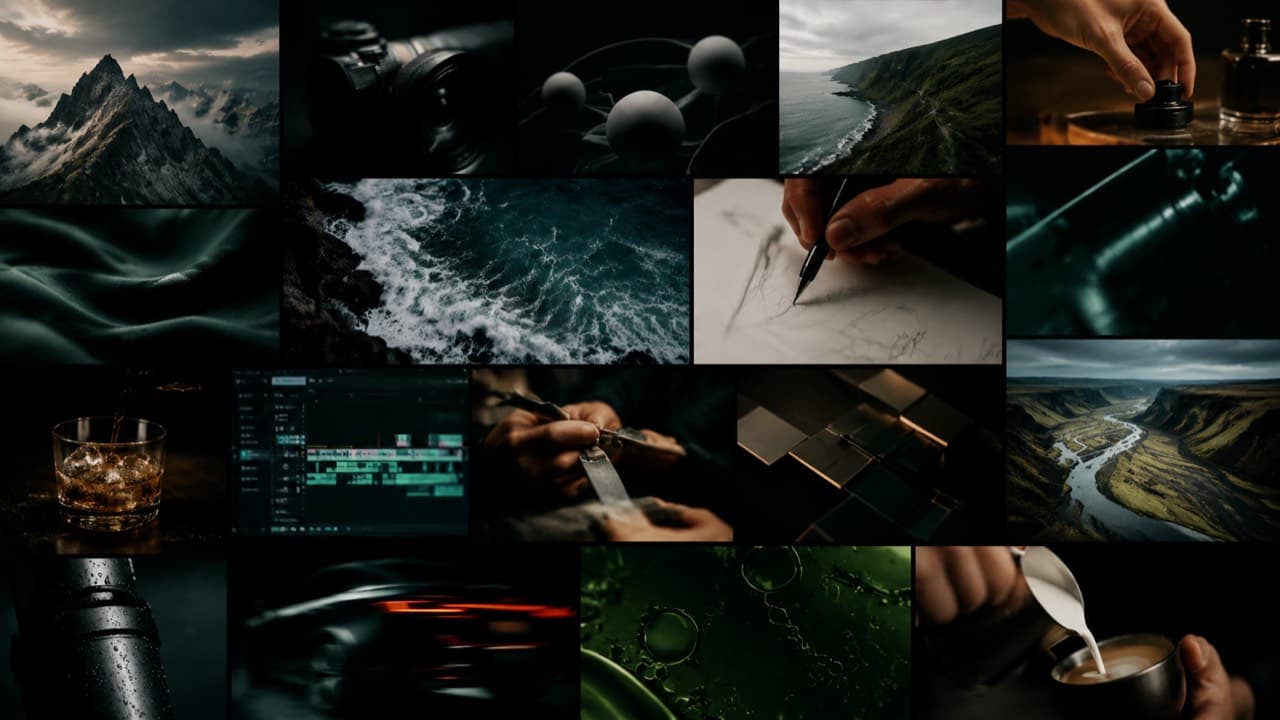
The mistake most faceless channels make is using whatever B-roll the script grabber returns and stitching it together with one of the seven free transitions in CapCut. The result reads as a dropshipping ad even when the content is good. The fix is to commit to one visual style and apply it consistently across every video.
There are roughly four faceless visual styles that work in 2026: AI-generated cinematic B-roll (Veo / Sora 2 / Seedance footage of people doing things, no recognizable face), screen-recording-driven (productivity, finance, software niches where the screen is the visual), motion-graphics-driven (animated illustrations and kinetic text — strong for explainer niches), and stock-photo-Ken-Burns (the lazy default; works but tells viewers your production budget is zero). Pick one. Don't mix.
If your niche has any tolerance for it, AI-generated cinematic B-roll using Veo 3.1 Fast or Seedance 2.0 Fast at 720p is the most under-priced production quality available in 2026. A 60-second video with 10 generated B-roll clips lands at roughly $1.50–$3 of credits and looks more produced than 90% of competing channels in any niche.
Step 4 — The production stack we'd actually use
- Voice: ElevenLabs (Turbo 2.5 voice) or OpenAI TTS-1-HD. ~$5/mo for daily use.
- Script: GPT-5 or Claude — research only, write the final yourself.
- Visuals: ViralTwin if recreating viral structures, or any AI video provider directly if you're scripting from scratch. Seedance 2.0 Fast 720p is the workhorse default at ~$0.16/second.
- Editing: CapCut or DaVinci Resolve. Both free; CapCut faster for shorts, Resolve better for long-form.
- Music: Epidemic Sound or Artlist. ~$15/mo. Don't use the YouTube Audio Library — viewers can identify those tracks within 2 seconds and it tells them you're new.
- Thumbnails: Photoshop with stock graphics. Or pay $5 per thumbnail until you can afford a permanent freelancer.
Step 5 — Cadence and scaling
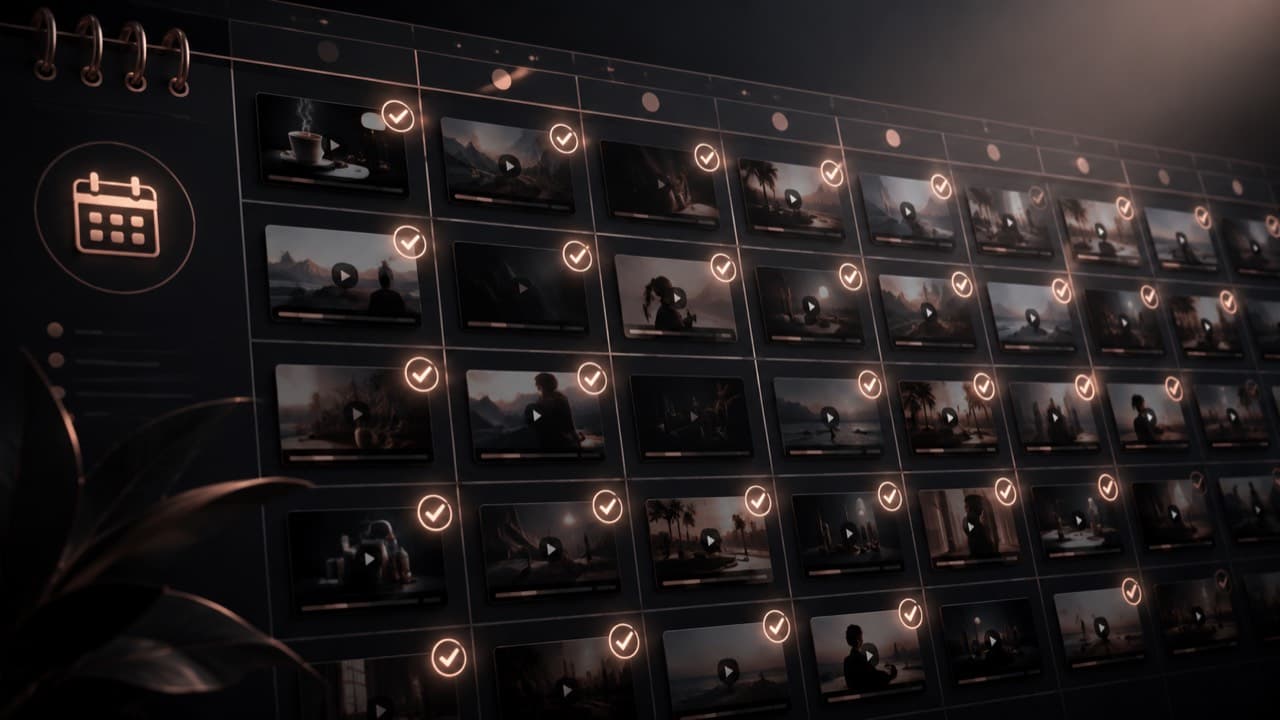
Most faceless channels die before their 30th video. The reason is almost never quality — the channels that die have decent quality. They die from cadence collapse: the creator sets a 'one a day' goal, hits it for two weeks, then takes a sick day, then a busy day, then realizes they haven't posted in eleven days. By the time they come back the algorithm has demoted them.
The fix is to build a buffer. Your goal for the first 30 days is not 30 videos posted. Your goal is 45 videos rendered, with 30 posted and 15 in queue. After that, your goal each week is to render 8 and post 7, banking one. The buffer is what lets you skip a sick day without breaking cadence. Channels that survive their first 90 days have a buffer; channels that don't, don't.
On output volume: 1 long-form (8–12 minutes) per week and 5–7 shorts per week is the sweet spot for most niches. Long-form drives watchtime and revenue; shorts drive subscriber growth and discovery. Pure shorts channels grow fast then plateau; pure long-form channels grow slow then compound. The 1:5 ratio gives you both.
Common failure modes
- Voice that doesn't match the niche. A breezy AI narrator on a finance channel feels off; a serious narrator on a comedy channel kills it. Match voice to niche tonality.
- Hook that arrives at 8 seconds. The first 1.5 seconds decide retention on shorts; the first 8 decide it on long-form. Both windows are small.
- Visual style drift. Episode 1 is cinematic AI B-roll, episode 4 is stock photo Ken Burns, episode 7 is screen recording. Audience reads this as 'I don't know what I'm doing.'
- No CTA. Faceless channels often forget to ask for the subscribe — there's no person on screen and the AI narrator skips it. Bake it into the script template, not the editing pass.
- Posting blindly. Track retention curves per video and edit accordingly. The single biggest skill in faceless YouTube is identifying what made the high-retention videos high-retention and replicating it.
Frequently asked questions
How long until a faceless channel is profitable?+
AdSense alone: 6–12 months on a typical niche. Profitable means different things — covering tool costs ($50–$80/mo) takes 3–4 months for most channels that find their audience; replacing a salary takes 12+ months and requires a niche that supports affiliate or sponsorship revenue alongside AdSense.
Will YouTube demonetize me for AI content?+
YouTube's policy as of 2026 is that AI content is fine as long as you disclose it where required and don't use it to spread misinformation or impersonate real people. Faceless explainer channels using AI voice and AI B-roll have not had monetization issues at scale; channels using AI to fake news or impersonate real creators have.
Should I disclose that my channel uses AI?+
Disclose AI voice in the description if your audience would care (some niches care, most don't). Disclose AI-generated visuals if you're depicting events that didn't happen. Don't over-disclose — your audience cares about whether the content is useful, not which tool generated which frame.
Can ViralTwin do everything in this stack?+
We do the visual layer well — scene-by-scene recreation of viral structures, AI character lock, multi-model rendering. We don't do voice or scripting. Most successful faceless creators use ViralTwin alongside ElevenLabs and a script tool, not as a replacement for either.
What niche has the highest dollar-per-view in 2026?+
Finance, B2B SaaS reviews, and high-end e-commerce reviews top the chart. Niches with high AdSense CPMs ($20+) plus strong affiliate ecosystems compound fastest. Avoid pure entertainment niches if you're optimizing for revenue per view — they're easier to grow but harder to monetize.
If your faceless channel uses AI cinematic B-roll, ViralTwin's canvas is the fastest way to ship multi-scene clips with the same character or product across every shot. Free trial, no card required.
Try the canvas